What I’m Actually Learning as a 19-Year-Old SWE Student (And Why)
Why your university degree won't make you employable, and the raw, self-taught roadmap you actually need to build real-world products.

Introduction
I'm Ahmer. I'm 19, I'm doing a 4-year Software Engineering degree at a fairly average institute in Hyderabad, and I'm also running a 3-year ADSE program at Aptech on the side. Two programs, same city, same brain, not enough sleep. That's the setup.
I didn't get into this because I watched some "Day in the Life of a Software Engineer" video and got inspired. I got into it because I wanted leverage. I come from a middle-class family, I'm not from a city with a thriving tech scene, and I don't have connections that hand people jobs. What I do have is a laptop, internet, and time. Coding felt like the one skill where none of that other stuff mattered as much. Nobody cares where you're from if your code works.
Here's the thing I figured out early, and it's probably the most important sentence in this whole post: my university is not going to make me employable. Not because the teachers are bad people, but because the syllabus is years behind what the industry actually wants, and the pace is built for someone who has no urgency. I have urgency. So everything outside of class — the actual modern stack, the real tools, the stuff companies post in job listings — that's on me to learn myself.
This post is just an honest account of where I'm at. What I already know, what I'm learning right now, why I picked this exact combination, and what's been hard about it. No "I built a million-dollar startup at 19" nonsense. Just a regular guy doing the work and being straight about it.
Where It Started
It started with HTML and CSS, like it does for almost everyone. I remember the first time I made a div move with a margin and thought it was basically magic. Looking back, the page was ugly. Comic Sans, blue links, the works. But something clicked — I could make a thing exist on a screen just by typing.
From there it was the usual progression: CSS got more serious, then Bootstrap came in because writing custom CSS for every single component was eating my life. Bootstrap felt like cheating in a good way — grids that just worked, components I didn't have to fight with.
Then JavaScript happened, and that's where I actually struggled. HTML and CSS are forgiving. JavaScript is not. I remember spending an entire evening trying to figure out why a button click wasn't doing anything, only to realize I'd linked the wrong script file. Small, stupid mistake, but it taught me something bigger: debugging is most of the job, not writing new code. Nobody tells you that early on. You think programming is about creating things. Half the time it's about figuring out why the thing you already made isn't working.
I also went through the classic mistake of copy-pasting code from tutorials without understanding it, getting it to "work," and feeling proud — until someone asked me to change one small thing and I had no idea where to even start. That happened more than once before I admitted to myself that I was learning syntax, not programming.
Once I accepted that, things slowed down but got more real. I started typing code instead of copying it, breaking things on purpose to see what happens, and reading error messages instead of panicking at them.
What I Already Know
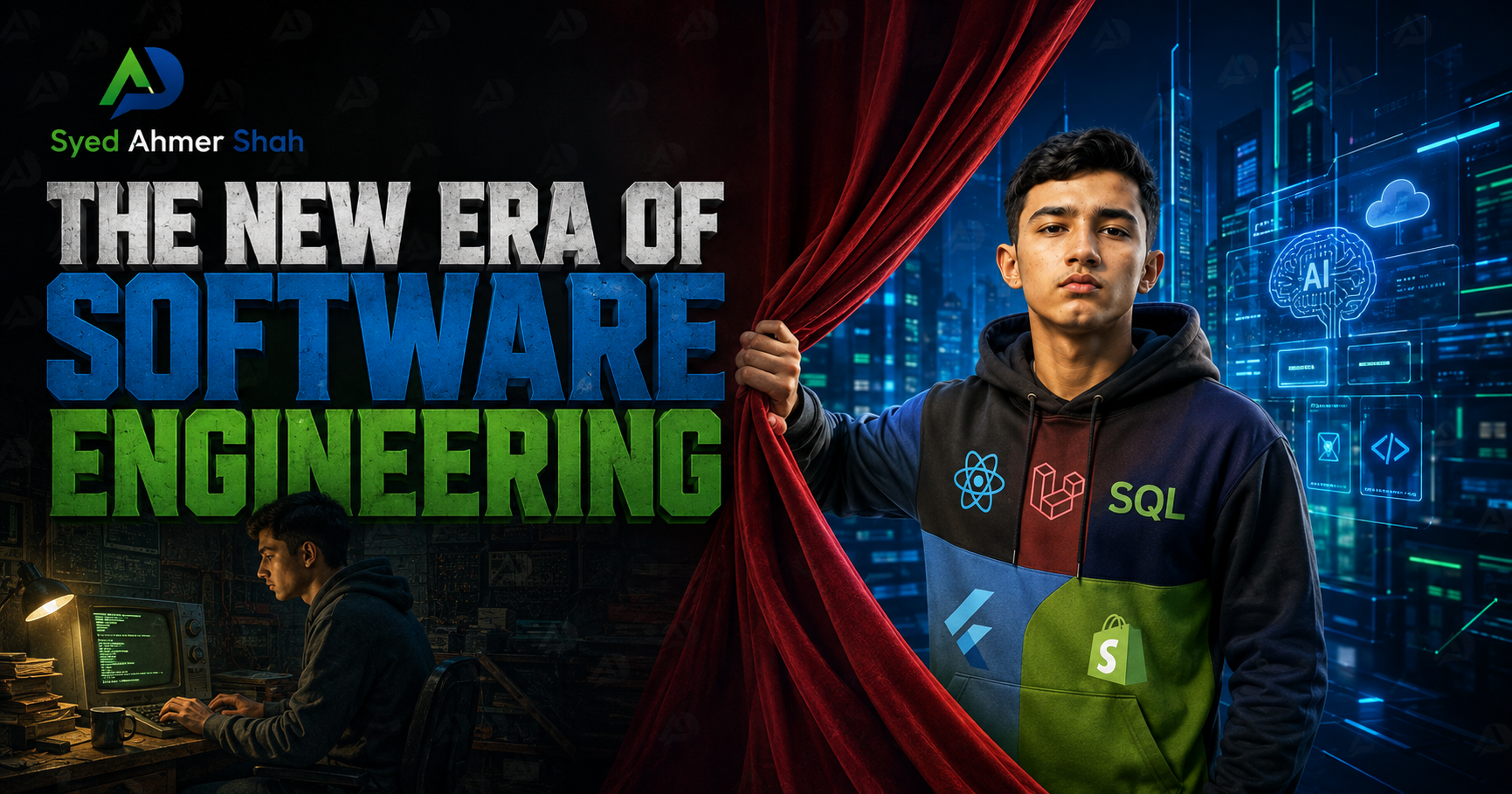
Right now my toolkit looks like this: HTML, CSS, JavaScript, Bootstrap, basic Tailwind, jQuery, PHP, SQL, Laravel, WordPress, some SEO, and enough comfort with JSON and XML to not be scared of data formats. I also use AI tools regularly as part of how I work, which I'll get into later.
Each one of these taught me something specific, not just "how to code."
HTML and CSS taught me structure and patience. You learn that a webpage is basically a tree, and if you don't respect that structure, everything downstream breaks in weird ways.
JavaScript taught me logic. Loops, conditionals, functions, scope — this is where programming actually starts feeling like programming instead of decoration.
jQuery is kind of outdated now, and I know that. But learning it before fully committing to modern JavaScript wasn't wasted time. It showed me how much the language has actually evolved, and it makes me appreciate why things like fetch and array methods exist instead of constantly wrapping everything in jQuery selectors.
PHP and SQL are where things got serious for me. This is where I stopped making "pages" and started making "applications." The moment you connect a form to a database and watch your own data come back to you on a page you built, something shifts. You start thinking in terms of systems, not screens.
Laravel was the next jump. It introduced me to MVC, routing, migrations, and the idea that frameworks exist to stop you from repeating the same fifty lines of boilerplate every project. Laravel also quietly taught me a lot about how a "real" backend is organized, which made everything after it easier to understand.
WordPress and SEO are the odd ones in this list, and I'll be honest — I picked those up partly because there's actual freelance demand for them, not because I find them thrilling. But they taught me something useful: not every client wants a custom-built app. Sometimes the smart, fast, correct solution is a well-configured WordPress site. Knowing when not to over-engineer something is its own skill.
What I'm Learning Right Now
This is the part most people actually care about, so let's get into it.
MERN Stack
I'm currently learning MongoDB, Express.js, React, and Node.js. Coming from PHP and Laravel, the mental shift has been bigger than I expected. Laravel hands you a lot of structure by default. Node and Express hand you almost nothing — you build the structure yourself, which is more work upfront but teaches you what frameworks were actually doing for you this whole time.
React has probably been the most humbling part of this. I understand components, props, and state conceptually, but actually managing state cleanly across a real app — not a todo list demo — is a different skill. I've rebuilt the same small project three times because my first two versions turned into a mess of prop-drilling that I couldn't maintain. That's not failure, that's just what learning this looks like.
MongoDB has been an adjustment too, mainly because after years of relational thinking with SQL, working with documents instead of rows and joins requires a slightly different brain mode. I still catch myself trying to "join" things that don't need joining.
Flutter and React Native
On the mobile side, I'm picking up Flutter and Dart, along with React Native. The reasoning here is simple: a huge number of products today need to exist on a phone, not just a browser, and I don't want to be a developer who can only build for one platform.
Dart was strange at first, mainly because it's not JavaScript and it's not PHP — it has its own opinions. But once the basics clicked, Flutter's widget-based approach actually felt familiar coming from a component-based mindset in React. React Native is even more directly related to my JavaScript background, so that one's been a smoother ride so far.
I'm not deep into either yet. I can build basic UIs, navigate between screens, handle simple state. I'm not pretending to be a mobile expert. I'm early. But early and moving is better than waiting until I feel "ready," which, realistically, never happens on its own.
AI-Assisted Workflows
This is the part I want to be precise about, because it's easy to misunderstand. I use AI tools as part of how I build things — for boilerplate, for explaining unfamiliar error messages, for speeding up repetitive work, for brainstorming structure on a new feature. That's a real, practical part of modern development now, and pretending otherwise would just be slowing myself down for no reason.
What I don't do is use AI to skip learning. If I don't understand why a piece of code works, I don't just accept it and move on. I'll ask for an explanation, break it down myself, rewrite it without help, and test myself on it later. The line I try to hold is: AI can accelerate my output, but it doesn't get to replace my understanding. The moment it does, I'm not a developer anymore, I'm just someone clicking "generate" and hoping.
Why These Technologies, Specifically
MERN and React Native/Flutter aren't random picks. Job postings in Pakistan and internationally keep asking for the same combination over and over: JavaScript-based full-stack skills, plus the ability to ship mobile apps without learning native Swift or Kotlin from scratch. Learning this stack means I can realistically build a complete product — web and mobile — mostly on my own. That's the actual goal.
Why I Chose This Path
A few reasons, and none of them are really about "passion" in the way people use that word.
First, real-world projects. I don't want to graduate with only assignment-level knowledge. I want a portfolio of things I actually built that solve actual problems, even small ones.
Second, freelancing. Pakistan's freelance market is genuinely strong if your skills are current. Clients abroad don't care about my university's name. They care if I can deliver a working product on time. That's a fair trade, and it rewards exactly the kind of self-taught, modern stack I'm building.
Third, startup and product potential. I'm not saying I'm about to launch the next big thing. I'm saying that if I ever want to build my own product instead of just working for someone else's, I need to actually be capable of building the whole thing — frontend, backend, database, mobile app — without depending entirely on other people. That capability is the actual asset here, not any specific app idea.
Fourth, flexibility. The job market shifts fast. Companies that wanted PHP five years ago want Node now. The ones that wanted only web now want mobile too. Betting on one narrow skill is risky. Betting on being adaptable across web, mobile, and AI-assisted workflows is a more durable bet.
Pros and Benefits
The biggest benefit is range. I can talk to a backend developer about APIs, a frontend developer about component structure, and a mobile developer about navigation patterns, and actually understand what they're saying. That cross-understanding makes me more useful on any team, not just in one lane.
Combining web, mobile, and AI-assisted workflow skills also means I'm not boxed into one type of project. A client wants a website? I can do that. A web app with a backend? Also that. A simple mobile app to go with it? Increasingly, yes. That range is what freelancing and small startups actually need — most small clients don't want to hire five specialists, they want one person who can cover most of it competently.
Long-term, I think this combination ages well. Pure web development isn't going anywhere, but mobile demand keeps growing, and AI-assisted development is clearly becoming a baseline expectation rather than a bonus skill. Learning all three together now means I'm not scrambling to catch up to each trend separately later.
Challenges and Cons
I'm not going to pretend this has been smooth, because it hasn't.
Information overload is real. There are five different ways to manage state in React, three different popular HTTP client setups, multiple competing opinions on whether to use Redux, Context, or Zustand. Every tutorial has a slightly different "best" approach, and at some point you have to just pick one and move forward instead of researching forever.
Balancing university with self-learning is genuinely difficult. Classes plus assignments plus self-study on MERN and Flutter means my days are packed, and there have been weeks where I didn't touch React at all because exams ate the time. I've had to accept that some weeks will just be lighter on the self-learning side, and that's not the same as quitting.
Staying consistent is the hardest part, harder than any actual technical concept. Motivation comes and goes. Discipline is what shows up when motivation doesn't. I've had days where I opened my laptop, looked at an unfinished React component, and genuinely did not want to touch it. Some of those days I pushed through anyway. Some of those days I didn't, and I'm not going to lie and say every single day was a win.
Tutorial addiction is something I had to consciously fight. Watching someone else build something feels productive. It feels like progress. But it's passive. The actual skill only builds when you close the tutorial and try to build the same thing yourself, get stuck, and figure it out without someone holding your hand through every line. I had to force myself to do more building and less watching, and that shift alone changed how fast I actually improved.
Where I Want to Go Next
The short-term goal is straightforward: get genuinely competent in the MERN stack, reach a comfortable working level in Flutter or React Native — probably Flutter first since I'm slightly further along there — and keep AI-assisted workflows as a permanent part of how I build, not a temporary crutch.
Medium-term, I want to be a real full-stack developer in the actual sense of the word — someone who can take a product from a rough idea to a deployed, working app across web and mobile, including the database design and the deployment pipeline, not just the parts that look impressive in a screenshot.
I also want to go deeper into actual software engineering concepts, not just framework usage. Data structures, algorithms, system design, proper testing practices. Frameworks change every few years. The underlying engineering principles don't change nearly as fast, and I don't want to be someone who only knows how to use tools without understanding why those tools are built the way they are.
Longer-term, I want to build something real — a product, not a portfolio piece — using everything I'm learning right now. Not chasing some inflated startup dream, just something useful that solves a real problem for real people, even on a small scale to start.
Final Thoughts
If I'm being completely honest, I don't feel like I'm ahead of schedule or behind schedule. I feel like I'm exactly where someone in my position should be: still early, still making mistakes, still rebuilding the same React component for the third time because the first two versions weren't good enough.
What I'd tell another student going through something similar is this: stop waiting to feel ready before you start. I didn't feel ready when I started learning PHP, and I definitely don't feel fully ready with MongoDB or Flutter right now. Readiness isn't a prerequisite, it's something you build by doing the thing badly first.
Also, drop the idea that your university degree alone will carry you. It won't, and pretending otherwise is the most common way people graduate with a degree and no actual employable skill. The self-learning is not optional extra credit. It's the actual job.
And finally — consistency beats intensity every time. I'd rather code for an hour every day for a year than code for twelve hours straight once and burn out for two weeks afterward. Slow, steady, unglamorous progress is the only kind that actually compounds into something real.
That's where I'm at. Still learning, still building, still figuring a lot of it out as I go. No finish line in sight, and honestly, that's fine.
Find me across the web:
Portfolio: ahmershah.dev
LinkedIn: Syed Ahmer Shah
GitHub: @ahmershahdev
DEV.to: @syedahmershah
Medium: @syedahmershah
Hashnode: @syedahmershah
Substack: @syedahmershah
HackerNoon: @syedahmershah
Substack: @syedahmershah
YouTube: @ahmershahdev
Instagram: @ahmershahdev
TikTok: @ahmershahdev