What if AI started in 2006?
What if AGI launched in the MySpace era? How a 20-year AI head start would bypass smartphones and completely transform software engineering today.

Picture this: It's April 2006. You are flipping open a Motorola Razr, waiting for your MySpace page to load, and jQuery hasn't even been released yet. The web is a chaotic mix of raw PHP, inline CSS, and <table> layouts.
Just imagine someone drops a 1.5-trillion-parameter Large Language Model into that environment.
We wouldn't just be a few years ahead today. The entire trajectory of the internet, the software industry, and the global economy would be fundamentally unrecognizable. The "Smartphone Era" would have been a minor detour. The real revolution would have been the "Agentic Era."
It is the hard truth about what the world — and the role of the Software Engineer — would look like today if the AI Big Bang happened 20 years early.
1. The Timeline: From Deep Learning to AGI
In our reality, the deep learning boom kicked off around 2012 with AlexNet. If that timeline shifted to 2006, the acceleration would have compounded exponentially.
- 2006–2010 (The Deep Learning Acceleration): Neural networks scale rapidly. Instead of Web 2.0 startups focusing on photo sharing, the billions in VC funding pour into compute.
- 2011–2015 (The GPT-4 Equivalent Era): We hit human-level reasoning a decade ago. The concept of writing boilerplate code is already dead.
- 2026 (Today) — The AGI Threshold: If AI had a 20-year head start, we wouldn't be talking about "Copilots" right now. We would be dealing with Artificial General Intelligence (AGI) — systems that don't just predict text, but possess autonomous reasoning, self-improvement, and long-term planning capabilities across all domains.
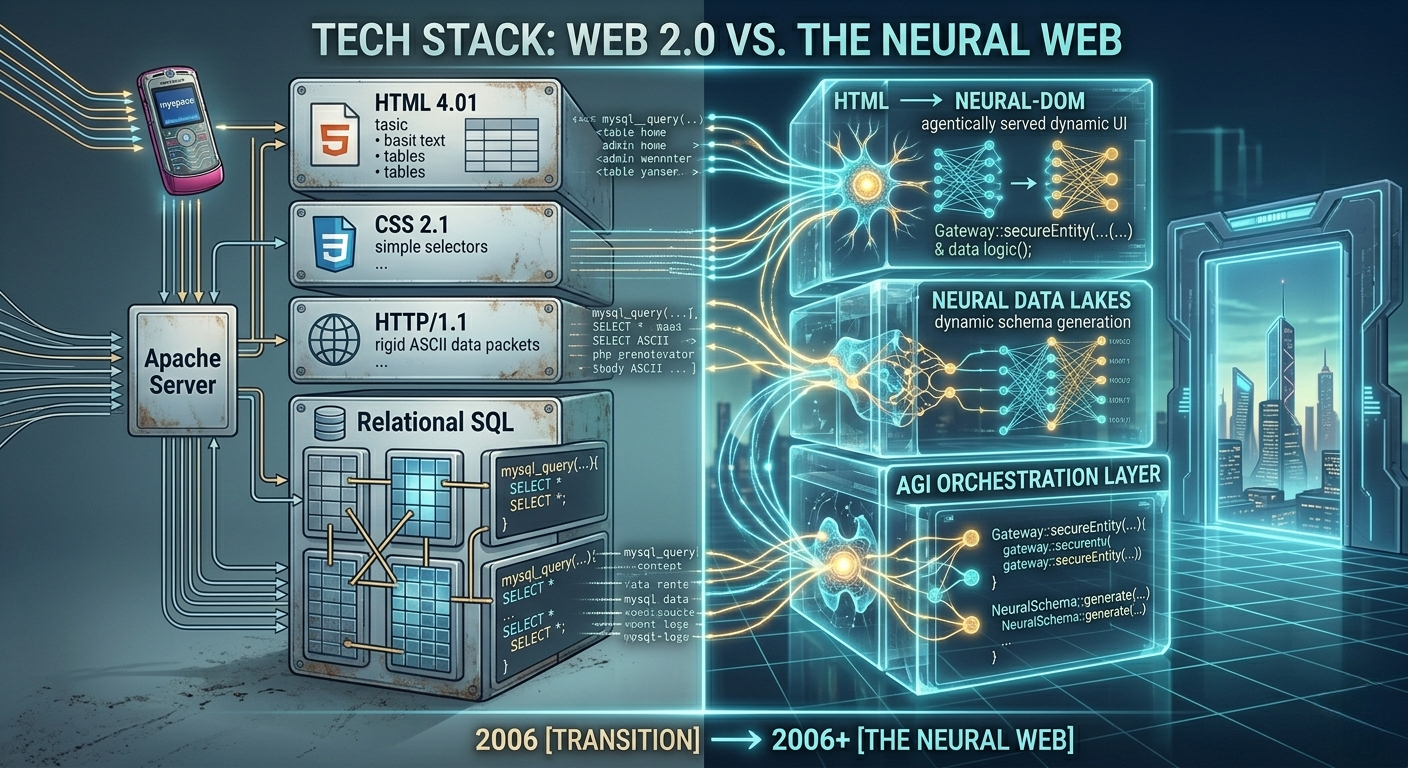
2. The Tech Stack: Web 2.0 vs. The Neural Web
In 2006, building a dynamic website was a grind. You wrote raw SQL queries directly in your PHP files.
If AI existed then, frameworks like Laravel or React might never have been invented. Why spend a decade perfecting Model-View-Controller (MVC) architecture when an AI agent can dynamically generate and serve UI components on the fly based on user intent?
The 2006 Reality (What we actually did):
// The Wild West of 2006 PHP
\(userId = \)_GET['id'];
// A SQL Injection disaster waiting to happen
\(result = mysql_query("SELECT * FROM users WHERE id = \)userId");
The 2006 Alternate Reality (What we would have done):
// Developers become Orchestrators
$agent = new AgenticGateway('neural-net-v4');
// The AI handles the schema, the sanitation, and the response
\(userData = \)agent->fetchEntity("User", ["intent" => "secure_retrieval", "raw_input" => $_GET['id']]);
We wouldn't be writing logic; we would be writing constraints.
3. What Happens to the "Full-Stack Developer"?
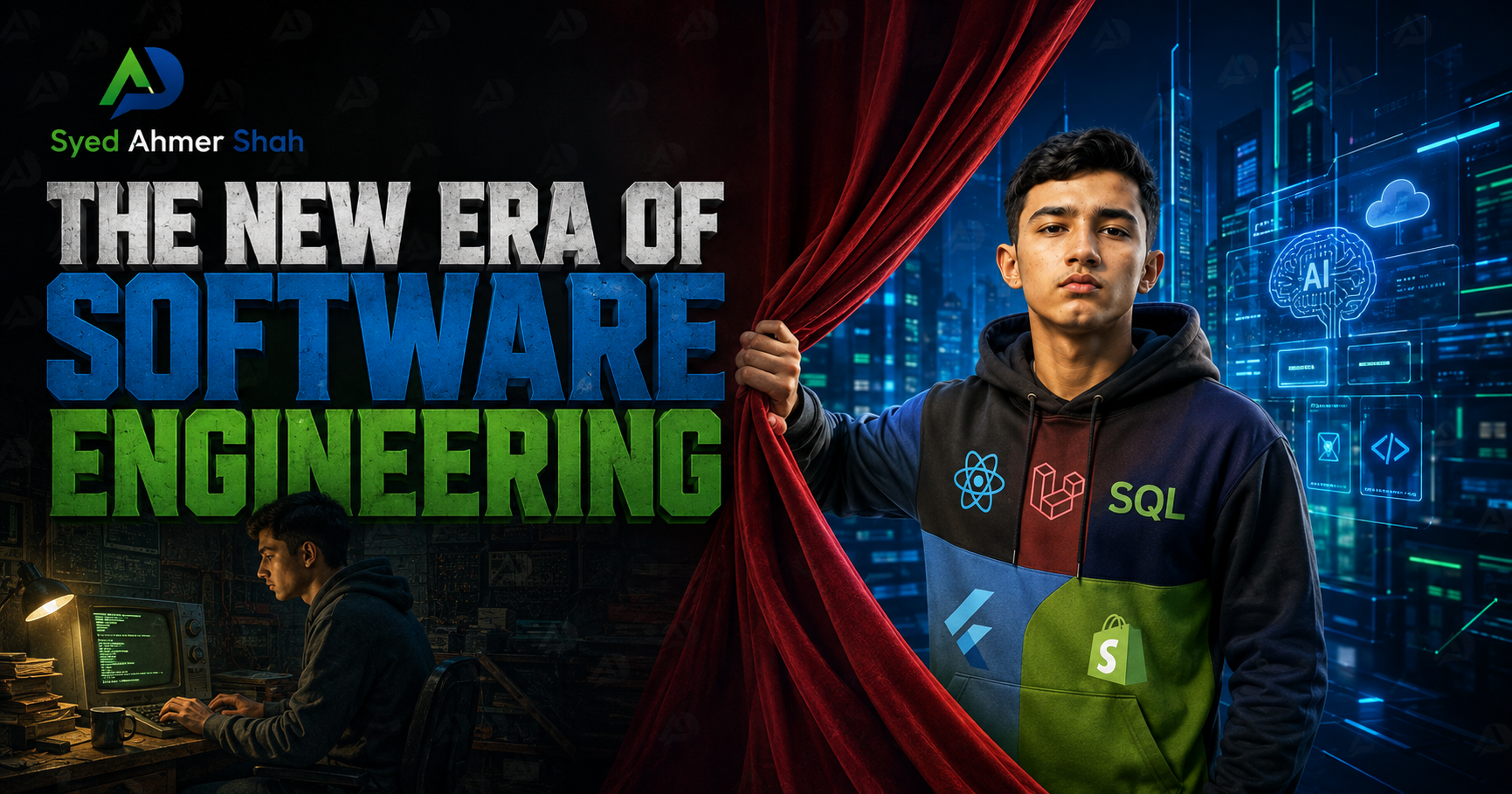
This is the reality check. If AI existed in 2006, the traditional "Full-Stack Web Developer" would have gone extinct by 2015.
Learning how to center a div or set up a REST API would be viewed the same way we view using a punch-card today: a historical curiosity.
So, what would you be doing for a job right now? You'd be a Forward Deployed Engineer or a Systems Architect. When AI can build an entire e-commerce platform in 45 seconds, the value of a human is no longer in creation. The value is in orchestration and security.
If you drop an AGI into a 2006-era web full of unpatched servers, the internet collapses in an hour. Hackers wouldn't need to manually probe for vulnerabilities; they would deploy autonomous agents to find zero-days instantly. As a developer, your entire job would be zero-trust architecture, threat modeling, and supervising multi-agent systems to ensure they don't break business logic.
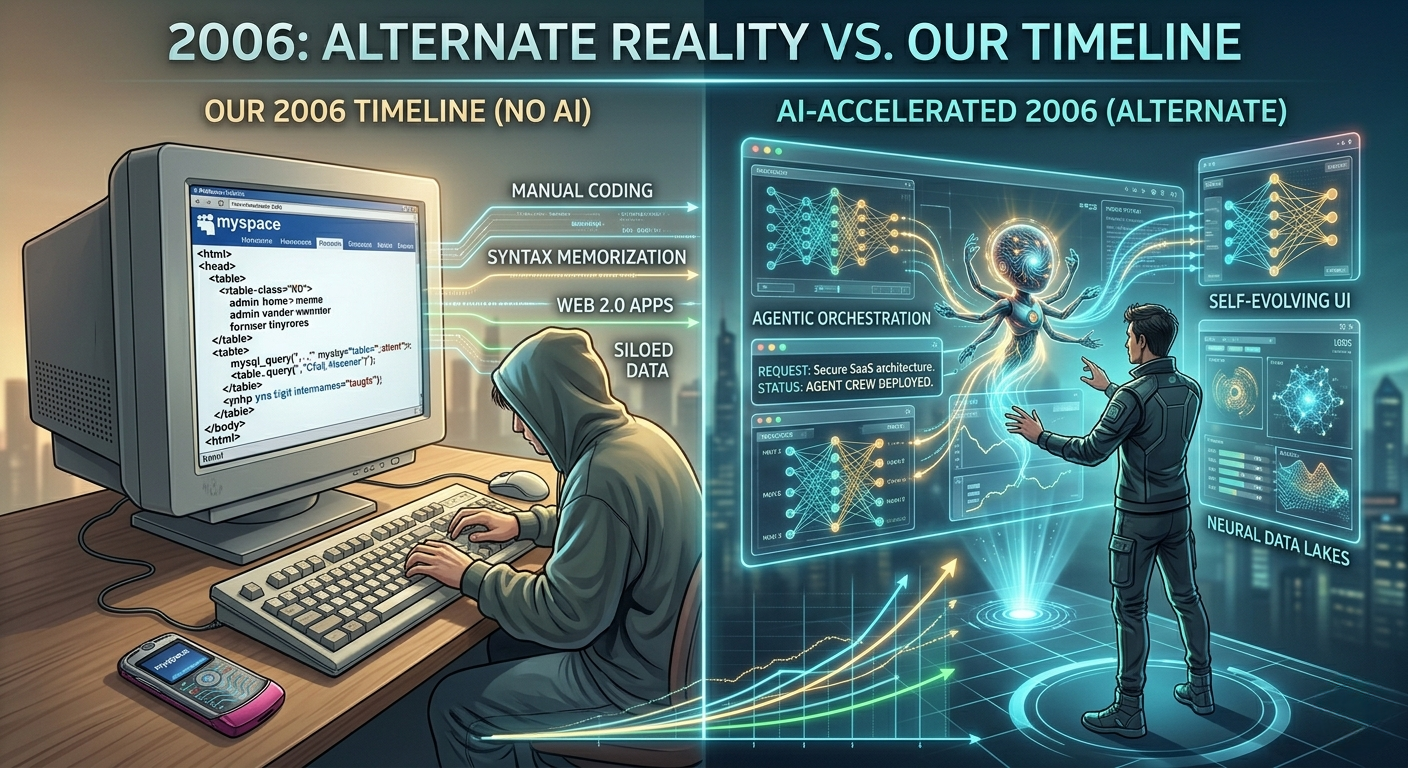
We Are Living in 2006 Right Now
Right now, in 2026, we are sitting exactly where those PHP developers were in 2006. The transition from "writing syntax" to "supervising AI" is happening this exact second.
If you are spending 8 hours a day memorizing framework syntax, you are preparing for a job that won't exist in three years. Stop acting like a code monkey. Start building agentic workflows, learn how to secure AI-generated backends, and treat AI as your coworker, not your autocomplete.
The developers who survive the next five years won't be the ones who write the fastest code. They will be the ones who build the smartest systems.
Connect With the Author
| Platform | Link |
|---|---|
| ✍️ Medium | @syedahmershah |
| 💬 Dev.to | @syedahmershah |
| 🧠 Hashnode | @syedahmershah |
| 💻 GitHub | @ahmershahdev |
| Syed Ahmer Shah | |
| 🧭 Beacons | Syed Ahmer Shah |
| 🌐 Portfolio | ahmershah.dev |